Fire Risk Assessment for
Offices
Professional fire risk assessments for office buildings and corporate workplaces. Compliant with the Regulatory Reform (Fire Safety) Order 2005 and October 2023 amendments requiring written documentation for ALL businesses. BAFE SP205 registered assessors.
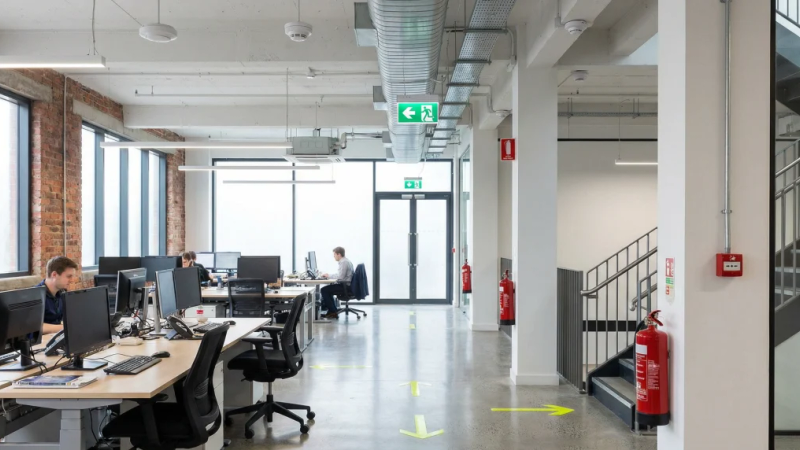
Office buildings and corporate workplaces require specialist fire risk assessments that address modern working patterns including hot-desking, hybrid working, server room infrastructure, and lithium-ion battery risks. Under the Regulatory Reform (Fire Safety) Order 2005, the responsible person for the building must ensure that adequate fire safety measures are in place, and since October 2023, all businesses must document their fire risk assessments in writing regardless of employee numbers.

Serving Offices & Corporate Buildings Across the UK
We work with facilities managers, building owners, and corporate compliance officers responsible for all types of office environments:
- Traditional offices — single-floor and multi-storey buildings
- Serviced offices & co-working spaces — flexible workspaces with hot-desking
- Corporate headquarters — complex multi-floor operations
- Mixed-use developments — offices above retail or with commercial tenants
- Business centres — multi-occupancy office buildings
Complete Office Fire Safety Assessment Package
Every office fire risk assessment includes a comprehensive package designed to meet all current legislative requirements and best practice standards:
- Full workplace inspection — workstations, meeting rooms, server rooms, storage, and common areas
- Electrical equipment assessment — load calculations, circuit capacity, PAT compliance
- Server room & IT evaluation — cooling redundancy, UPS battery safety, fire suppression suitability
- Hot-desking & hybrid working review — charging stations, variable occupancy, evacuation procedures
- Document storage assessment — combustible loads, clearances, detection systems
- After-hours safety evaluation — lone worker policies, unoccupied period detection, cleaning protocols
- Lithium-ion battery risk assessment — device inventory, charging safety, thermal runaway protocols
- Detailed photographic report — BS 7974 compliant with risk ratings and prioritised action plan
- Ongoing compliance support — guidance on implementing recommendations and review scheduling
Why Office Managers Choose Fire Assessment North
Facilities managers and corporate compliance officers across the UK trust us for their offices because we understand the specific challenges of modern workplace fire safety:
- 24-hour turnaround on standard assessments — minimising disruption to business operations
- BAFE SP205 registered — independently audited and accredited
- October 2023 compliant — following the latest mandatory documentation requirements
- Corporate governance ready — board-level reporting format with director liability protection
- Multi-office portfolio support — centralised scheduling with bulk discounts of 10-15%
- Modern workplace specialists — expertise in hot-desking, hybrid working, and lithium-ion risks
- Competitive pricing — transparent fees with no hidden costs
Why Office Fire Risk Assessments Are Legally Mandatory
October 2023 amendments now require ALL businesses to document fire risk assessments in writing, regardless of employee numbers.
22,000
Workplace fires annually causing millions in losses
Oct 2023
New mandatory documentation requirements for ALL offices
71%
Organizations haven't updated assessments for lithium-ion battery risks
Office operators face severe consequences for fire safety non-compliance. UK legislation imposes unlimited fines and up to 2 years imprisonment for serious breaches. Directors and senior managers face personal liability extending beyond corporate protection. Enforcement authorities can issue prohibition notices immediately closing premises until critical failures are rectified. October 2023 amendments now require ALL businesses to document fire risk assessments in writing, regardless of employee numbers.
Our Specialist Office Assessment Process
Comprehensive evaluations designed specifically for modern corporate environments with electrical equipment, server rooms, and hybrid working patterns.
Site Inspection
Complete walk-through of all office areas including workstations, server rooms, document storage, meeting rooms, and common areas.
Electrical Equipment Assessment
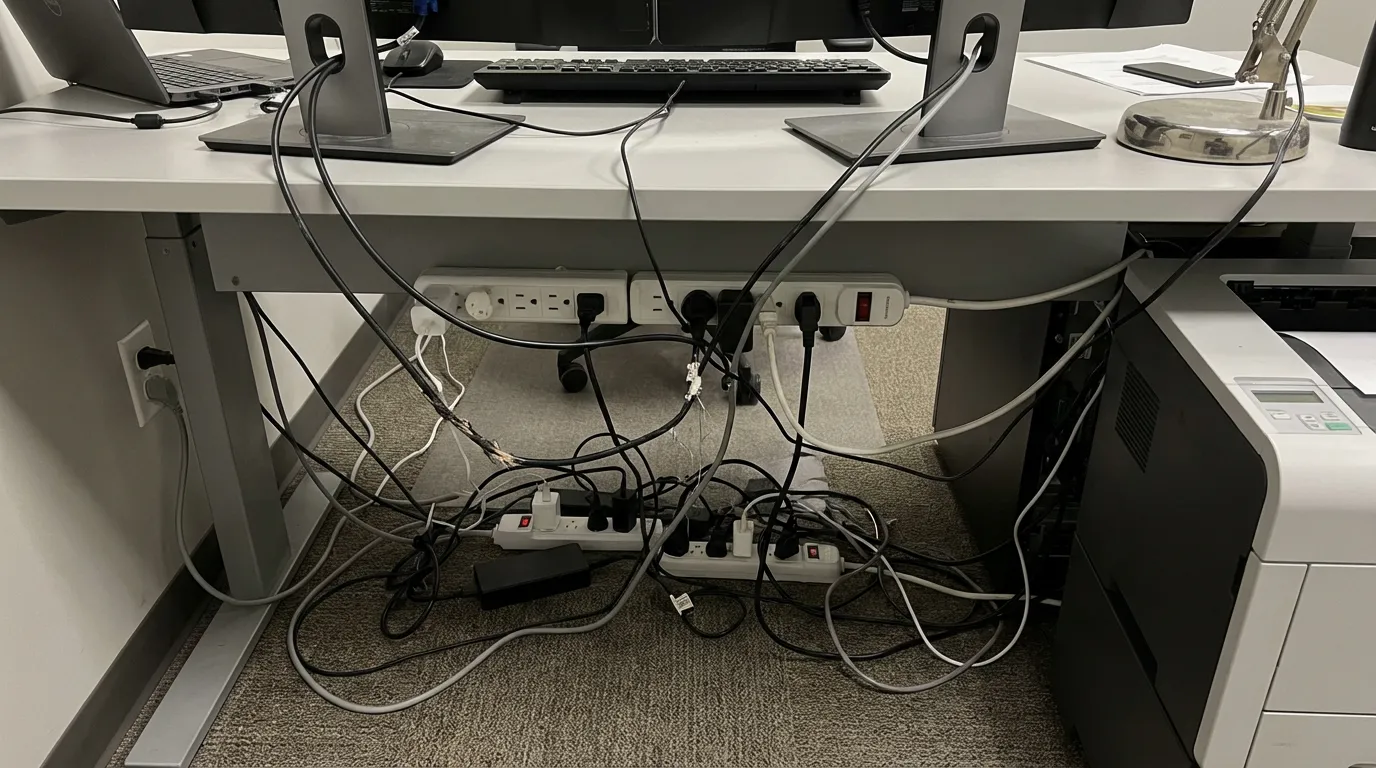
Evaluation of electrical loads, hot-desking charging stations, daisy-chained power strips, and equipment overload risks causing 19% of workplace fires.
Server Room & IT Infrastructure
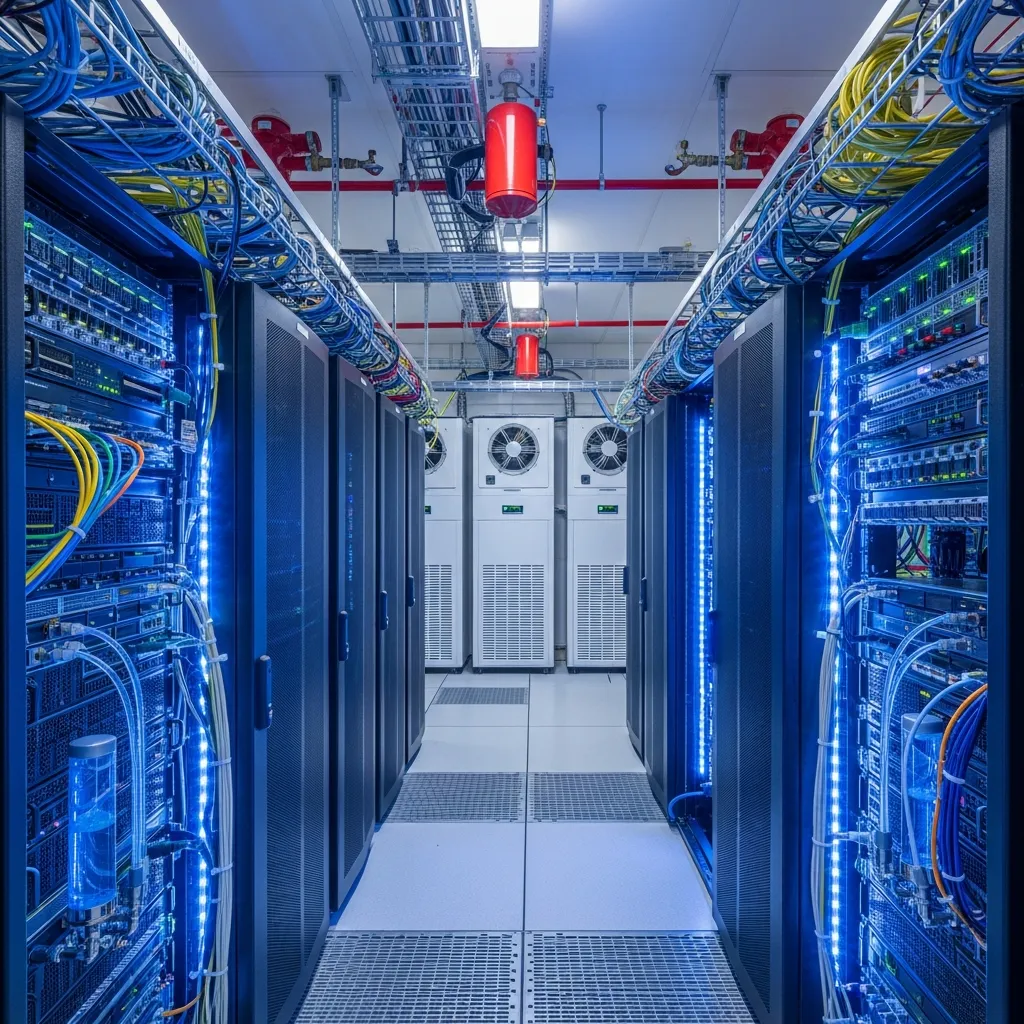
Heat generation assessment, cooling redundancy verification, UPS battery safety evaluation, fire suppression suitability, and cable management inspection.
Modern Workplace Challenges
Hot-desking risks, after-hours security assessment, lithium-ion battery hazards, hybrid working evacuation procedures, and visitor management evaluation.
Compliance-Ready Report
Comprehensive documentation meeting October 2023 legislative requirements, board-level reporting format, insurance compliance verification, and prioritised action plan.
6 Critical Office Fire Hazards We Assess
Modern offices present unique fire risks requiring specialist assessment beyond standard commercial properties.
Electrical Equipment Overload
Each workstation supports multiple devices including computers, dual monitors, phone chargers, and personal equipment. Electrical equipment causes 19% of all workplace fires through overloaded circuits, damaged cables, and daisy-chained extension leads. Hot-desking environments intensify these risks as multiple users share workstations with varying electrical demands.
Our Assessment:
Electrical load calculations per workstation, circuit capacity verification, power distribution adequacy evaluation, identification of daisy-chained extension leads, portable appliance testing (PAT) compliance review, charging station electrical demand assessment, and recommendations for optimal socket placement meeting modern equipment requirements.
Server Room & IT Infrastructure
Server rooms concentrate significant fire risks within compact spaces. Equipment generates temperatures up to 40°C ambient, requiring dedicated cooling with backup systems. UPS batteries containing lithium-ion cells pose thermal runaway risks, potentially burning at 700-1000°C with self-sustaining combustion difficult to extinguish.
Our Assessment:
Cooling system redundancy evaluation, temperature and humidity monitoring verification, electrical load distribution inspection, UPS battery safety assessment including lithium-ion thermal runaway risks, cable management adequacy review, fire suppression system suitability verification, and VESDA early warning consideration.
Document Storage & Combustible Loads
Despite digital transformation, many offices maintain substantial paper archives creating significant combustible loads. Paper stacks facilitate rapid fire spread with flames propagating quickly through vertical storage. Archive rooms frequently lack adequate detection or suppression systems, creating delayed discovery risks.
Our Assessment:
Combustible load calculations for storage areas, minimum clearance verification from heat sources, fire-resistant cabinet suitability evaluation for critical documents, sprinkler system coverage adequacy, detection system appropriateness for archive environments, and housekeeping schedule effectiveness review.
Hot-Desking & Hybrid Working
Hot-desking environments create unique fire safety challenges through variable occupancy patterns and equipment proliferation. Workers unfamiliar with specific office layouts need clear evacuation signage. Hybrid working patterns (28% of UK workers) create unpredictable daily attendance with occupancy peaks on Tuesday-Thursday.
Our Assessment:
Power provision adequacy evaluation for shared workstations, electrical load capacity verification for hot-desk areas, evacuation procedure effectiveness for transient workers, induction program assessment for temporary and hybrid workers, visitor management procedure review, and check-in/check-out system evaluation.
After-Hours & Night-Time Safety
Offices face elevated fire risks outside normal working hours when buildings operate with minimal or no staffing. Delayed fire detection when premises are unoccupied allows fires to establish before discovery. Equipment running overnight operates without supervision. Cleaning activities use flammable products during periods with limited oversight.
Our Assessment:
Out-of-hours procedure adequacy evaluation, automatic detection system verification for unoccupied periods, alarm transmission to monitoring stations or key holders, lone worker policy assessment, security patrol arrangements, equipment shutdown procedures for overnight periods, and cleaning contractor fire safety awareness.
Lithium-Ion Battery Risks
Lithium-ion batteries present rapidly increasing fire risks in office environments. 338 fires involving e-bikes and e-scooters occurred in 2023, with batteries burning at extreme temperatures of 700-1000°C. Thermal runaway reactions happen explosively, creating self-sustaining combustion extremely difficult to extinguish. 71% of organisations have NOT updated fire risk assessments for these risks.
Our Assessment:
Lithium-ion device inventory and risk evaluation, charging station safety verification, battery damage inspection protocols, managed charging procedure effectiveness, dedicated charging area location assessment away from exits, proper disposal procedure verification, staff training on warning signs including bulging, heat, and rapid discharge, and e-bike/e-scooter storage policy review.
How Much Does an Office Fire Risk Assessment Cost?
Costs typically range from £395–£1,500 depending on office size, complexity, and number of employees.
Factors affecting cost: Costs are influenced by floor area, number of employees, server room complexity, presence of lithium-ion battery charging, and whether hot-desking arrangements require additional evaluation. Multi-site portfolios benefit from 10-15% bulk discount.
Frequently Asked Questions
Common questions from office managers, facilities teams, and corporate compliance officers about workplace fire safety.
What fire risks are unique to modern office environments?
How does the Fire Safety Order 2005 apply to offices?
How often should office fire risk assessments be reviewed?
What are the fire risks of hot-desking arrangements?
How should server rooms be assessed for fire risk?
What fire safety measures are required for document storage areas?
How does after-hours security impact office fire risk?
What are the penalties for non-compliance with office fire safety regulations?
How can multi-office portfolios be efficiently managed for fire safety?
What should be included in an office fire evacuation plan?
Ready to Get Your Fire Risk Assessment for Offices?
Professional service from BAFE-accredited engineers. 24-hour turnaround. From £395 + VAT.