Fire Risk Assessment for
Hotels
Professional fire risk assessments for hotels, guest houses, and B&Bs. Sleeping guest protection, commercial kitchen safety, FD30 fire door compliance, and multi-language evacuation procedures. BAFE SP205 registered assessors.
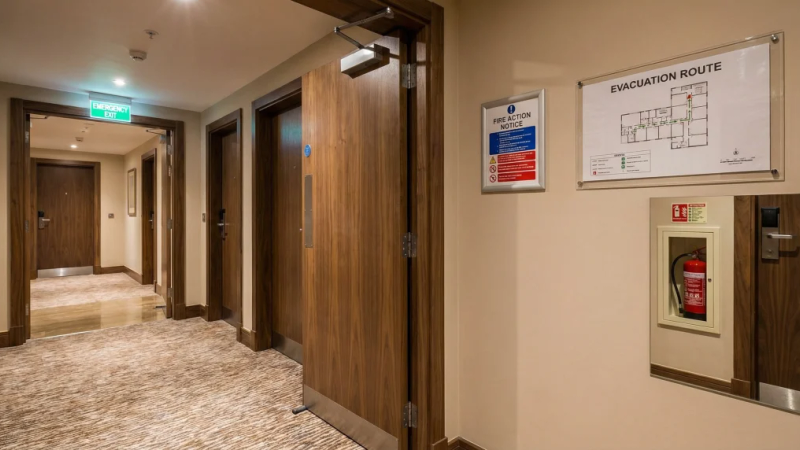
Hotels, guest houses, and bed and breakfasts require specialist fire risk assessments that address sleeping guest safety, 24/7 operations, commercial kitchen hazards, and multi-language evacuation procedures. Under the Regulatory Reform (Fire Safety) Order 2005, hotel operators have specific duties to ensure fire detection, escape routes, and evacuation procedures protect sleeping occupants at all hours.
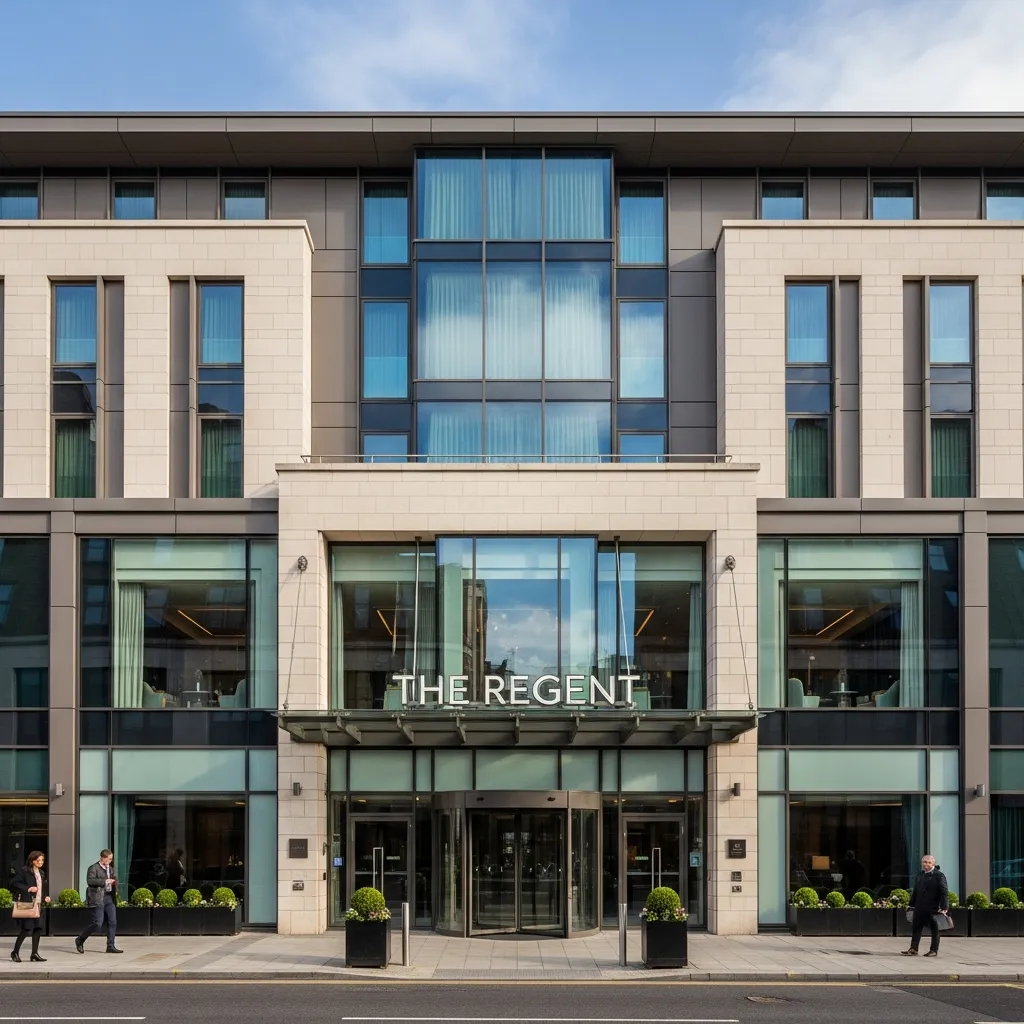
Serving Hotels & Hospitality Across the UK
We work with hotel operators, general managers, and compliance officers responsible for all types of hospitality premises:
- Hotels — budget, boutique, and luxury establishments
- Guest houses & B&Bs — smaller hospitality premises
- Conference hotels — with event and meeting facilities
- Spa & leisure hotels — with swimming pools and treatment areas
- Multi-site hotel groups — coordinated compliance across locations
Complete Hotel Fire Safety Assessment Package
Every hotel fire risk assessment includes a comprehensive package designed to meet all current legislative requirements and licensing standards:
- Full hotel inspection — guest rooms, corridors, kitchens, conference facilities, back-of-house
- Sleeping guest safety evaluation — FD30 fire doors, alarm audibility, smoke detection
- Commercial kitchen assessment — suppression systems, extraction, grease accumulation
- Conference facility evaluation — occupancy calculations, partition fire resistance, emergency lighting
- Disabled guest PEEPs — refuge areas, evacuation chairs, visual and audible alarms
- Multi-language procedure review — fire action notices, welcome packs, voice alarm systems
- Night staffing assessment — adequacy evaluation for sleeping guest protection
- Detailed photographic report — licensing-compliant with risk ratings and prioritised action plan
- Ongoing compliance support — guidance on implementing recommendations and review scheduling
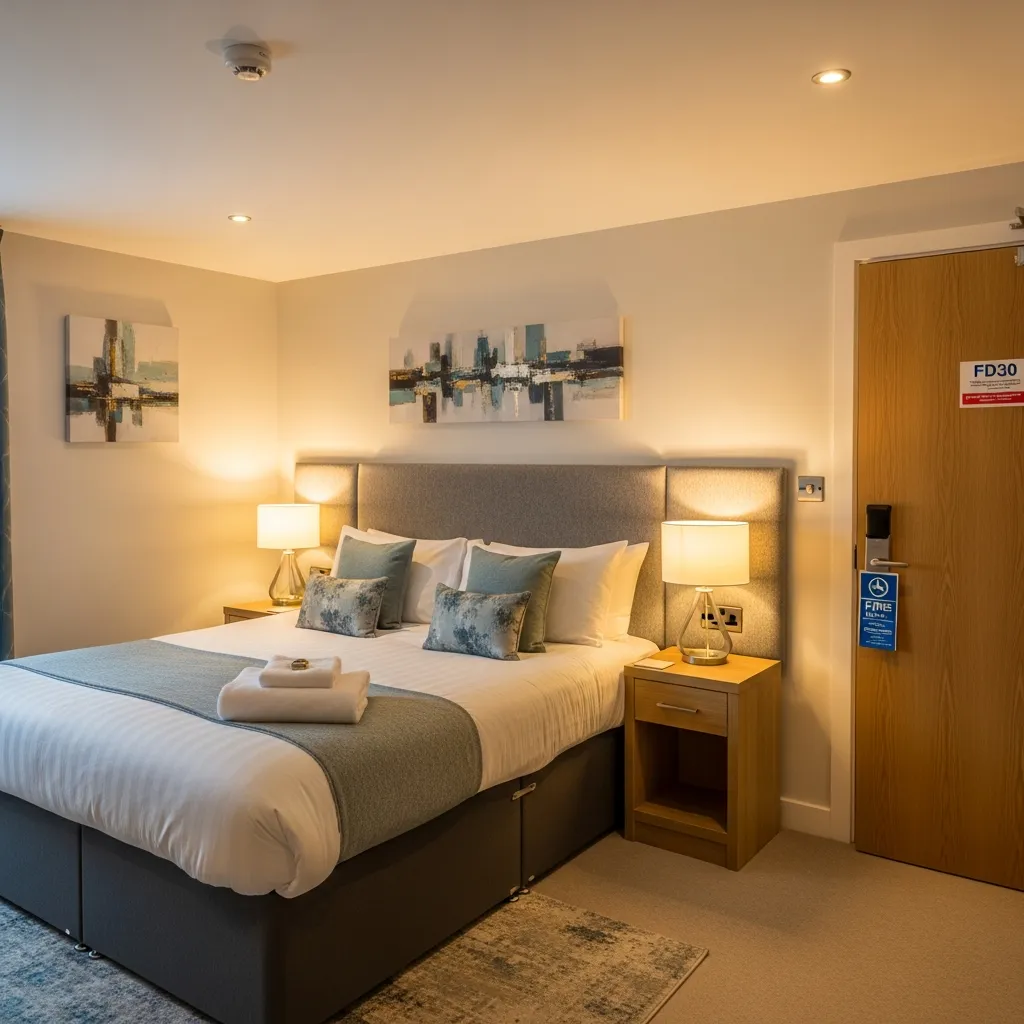
Why Hotel Operators Choose Fire Assessment North
Hotel operators across the UK trust us for their premises because we understand the specific challenges of hospitality fire safety:
- 24-hour turnaround on standard assessments — licensing deadlines met every time
- BAFE SP205 registered — independently audited and accredited
- Sleeping guest specialists — alarm audibility, FD30 doors, evacuation procedures
- Multi-language expertise — international guest communication strategies
- Commercial kitchen assessment — wet chemical suppression and extraction systems
- Licensing-compliant documentation — accepted by all local authorities
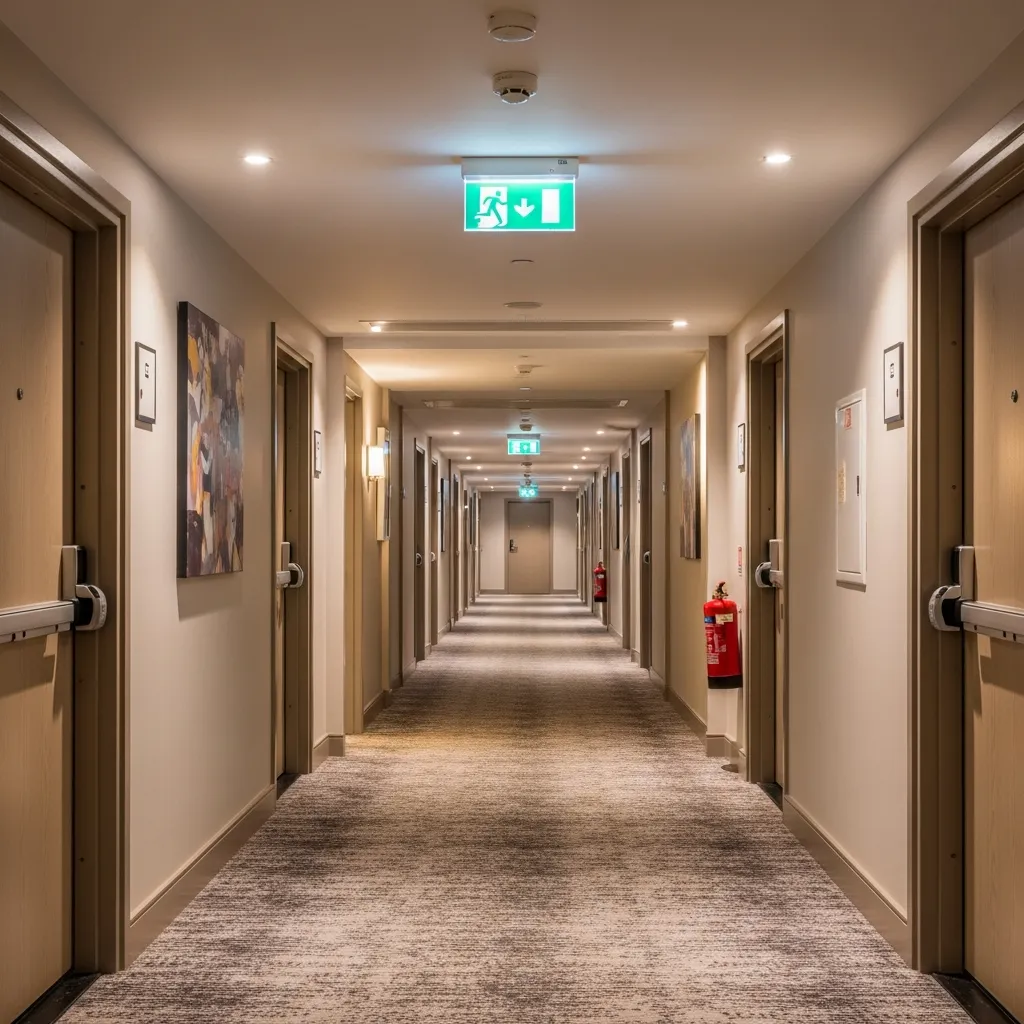
Why Hotel Fire Risk Assessments Are Legally Mandatory
Hotels present unique fire safety challenges with sleeping guests, 24/7 operations, and constantly changing occupancy.
3,900
Hospitality fires annually causing £100m in losses
15
Deaths and 150 injuries in UK hotel fires yearly
FD30
Minimum fire door rating for all guest rooms
Hotels face devastating consequences from fire safety non-compliance. Under UK fire safety legislation, hotel owners face unlimited fines and up to 2 years imprisonment for serious breaches. Enforcement authorities can issue prohibition notices immediately closing your premises. Beyond criminal penalties, civil liability for guest injuries or deaths can result in multi-million pound compensation claims. Your licensing, insurance validity, and business reputation all depend on comprehensive fire risk assessment.
Our Specialist Hotel Assessment Process
Comprehensive evaluations designed specifically for hospitality environments with sleeping accommodation and 24/7 operations.
Site Inspection
Complete walk-through of all areas including guest bedrooms, commercial kitchens, conference facilities, and back-of-house operations.
Sleeping Guest Safety
Evaluation of FD30 fire doors, smoke detection systems, alarm audibility levels (75dB at bedhead), and multi-language evacuation procedures.
Operational Hazards
Commercial kitchen suppression systems, laundry facilities, housekeeping operations, and night staffing adequacy assessment.
Vulnerable Guests
PEEP requirements for disabled guests, refuge area assessment, evacuation chair provision, and international guest communication strategies.
Licensing-Ready Report
Comprehensive documentation for local authority licensing, insurance compliance, and enforcement authority inspections with prioritised action plan.
6 Critical Hotel Fire Hazards We Assess
Hotels present unique fire risks requiring specialist assessment beyond standard commercial properties.
Sleeping Guest Safety
Sleeping guests represent the most vulnerable occupants in hotel fires. Research shows people in deep sleep may not respond to smoke alarms for 2-4 minutes, with alcohol consumption potentially doubling this response time. Hotels must ensure alarm systems provide 75dB sound pressure at the bedhead to wake sleeping guests. Smoking materials account for only 8% of hotel fires but cause 75% of fire-related deaths.
Our Assessment:
FD30 fire door compliance verification for all guest rooms, smoke detection system adequacy evaluation, alarm sound pressure testing, self-closing door mechanism inspection, multi-language fire action notice review, and assessment of whether low-frequency sounders proven more effective at waking people should be installed.
Commercial Kitchen Safety
Commercial kitchens account for almost half of all hotel fires through deep fat fryers, grills, solid fuel ovens, and extraction systems. Cooking equipment with heat sources, cooking oils, and ventilation ductwork requires specialist suppression systems and rigorous maintenance protocols. Extraction systems accumulate grease deposits creating hidden fire loads throughout ductwork.
Our Assessment:
Wet chemical suppression system adequacy evaluation for modern kitchen equipment, extraction system grease accumulation inspection, deep fat fryer safety protocol review, solid fuel cooking equipment assessment, staff training verification on suppression system operation, and emergency shutdown procedure evaluation.
Conference & Event Facilities
Conference facilities experience dramatic occupancy variations from intimate board meetings to capacity exhibitions, creating complex evacuation challenges. Temporary staging, exhibition stands, and audio-visual equipment create additional fire loads and potential ignition sources. Delegates unfamiliar with the building may be reluctant to evacuate during alarms.
Our Assessment:
Maximum safe occupancy calculation based on available exits, travel distances, and exit widths, temporary equipment fire load evaluation, partition wall fire resistance verification, ceiling void compartmentation inspection, emergency lighting adequacy, and staff training review on managing conference delegate evacuation.
Corridors & Escape Routes
Hotel corridors designed as protected escape routes frequently become compromised by housekeeping trolleys, room service equipment, and guest luggage. Fire doors essential for compartmentation are often wedged open for convenience by staff or guests. Studies show properly functioning fire doors reduce fire spread by up to 95%, yet surveys regularly find 60% of hotel fire doors have defects.
Our Assessment:
Corridor obstruction evaluation including housekeeping storage practices, fire door self-closing mechanism functionality testing, intumescent strip integrity inspection, door gap measurement against FD30/FD60 specifications, smoke seal condition verification, and staff training review on maintaining clear escape routes.
Laundry Facilities
Laundry facilities operate continuously in larger hotels processing thousands of items daily, creating significant fire risks through lint accumulation in dryers, overheating equipment, and combustible textiles. Despite causing only 8% of fires, laundry rooms account for 12% of civilian injuries due to rapid fire development when textiles ignite.
Our Assessment:
Lint extraction system inspection and cleaning frequency evaluation, tumble dryer thermostat and temperature safety cutoff verification, fire detection system adequacy for laundry environments (heat rather than smoke detection), automatic suppression system assessment, electrical installation condition review, and staff training verification on recognising overheating equipment warnings.
International Guest Communication
International guests face critical communication barriers during fire emergencies, potentially not understanding evacuation announcements, fire action notices, or verbal staff instructions. Visual alarm systems, internationally recognised symbols, and multi-language safety information become essential for effective evacuation. Staff require training on assisting confused or panicked guests who cannot understand verbal instructions.
Our Assessment:
Multi-language fire action notice adequacy review in guest bedrooms and public areas, visual alarm system evaluation (flashing beacons for hearing-impaired guests), internationally recognised evacuation signage inspection, welcome pack fire safety information assessment, voice alarm system multi-language capability verification, and staff training evaluation on non-verbal communication techniques.
How Much Does a Hotel Fire Risk Assessment Cost?
Costs typically range from £495–£3,000 depending on hotel size, number of rooms, and complexity of operations.
Factors affecting cost: Costs are influenced by number of rooms, number of floors, presence of commercial kitchen, conference facilities, spa/leisure facilities, and whether disabled guest PEEPs are required. Multi-site portfolios benefit from 10-15% bulk discount.
Frequently Asked Questions
Common questions from hotel operators, general managers, and hospitality compliance officers about fire safety.
How often should hotels conduct fire risk assessments?
What are the unique fire hazards in hotels?
Are fire doors mandatory in hotel bedrooms?
What fire detection equipment is required in hotel rooms?
How should hotels handle multi-language evacuation procedures?
What are the penalties for non-compliance with hotel fire safety regulations?
Do conference facilities require separate fire risk assessments?
What training do hotel staff need for fire safety?
How are disabled guests accommodated in hotel fire evacuations?
What documentation is required for hotel fire risk assessments?
Ready to Get Your Fire Risk Assessment for Hotels?
Professional service from BAFE-accredited engineers. 24-hour turnaround. From £495 + VAT.