Fire Risk Assessment for
Flats
Professional fire risk assessments for blocks of flats. Compliant with Fire Safety Act 2021, Building Safety Act 2022, and the new BS 9792:2025 standard. BAFE SP205 registered assessors serving freeholders, managing agents, RTM companies, and landlords across the UK.
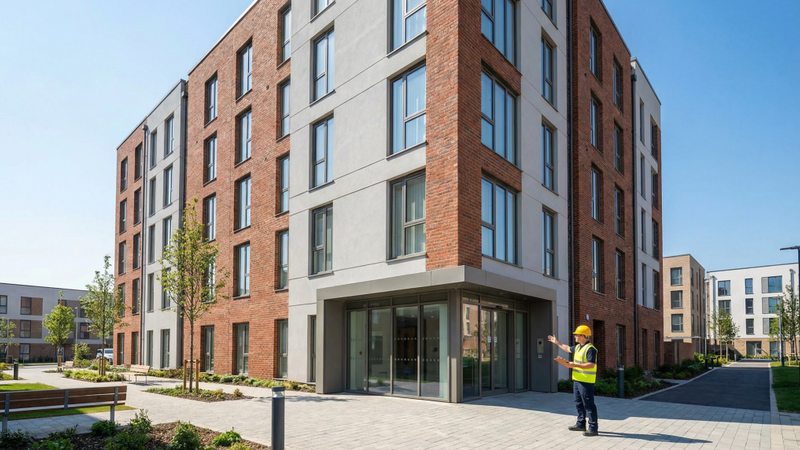
Fire Risk Assessment for Flats
Residential flats and apartment blocks require specialist fire risk assessments that address both individual dwelling safety and the fire safety of common areas shared by all residents. Under the Regulatory Reform (Fire Safety) Order 2005, the responsible person for the building must ensure that adequate fire safety measures are in place throughout the communal areas and the building structure.
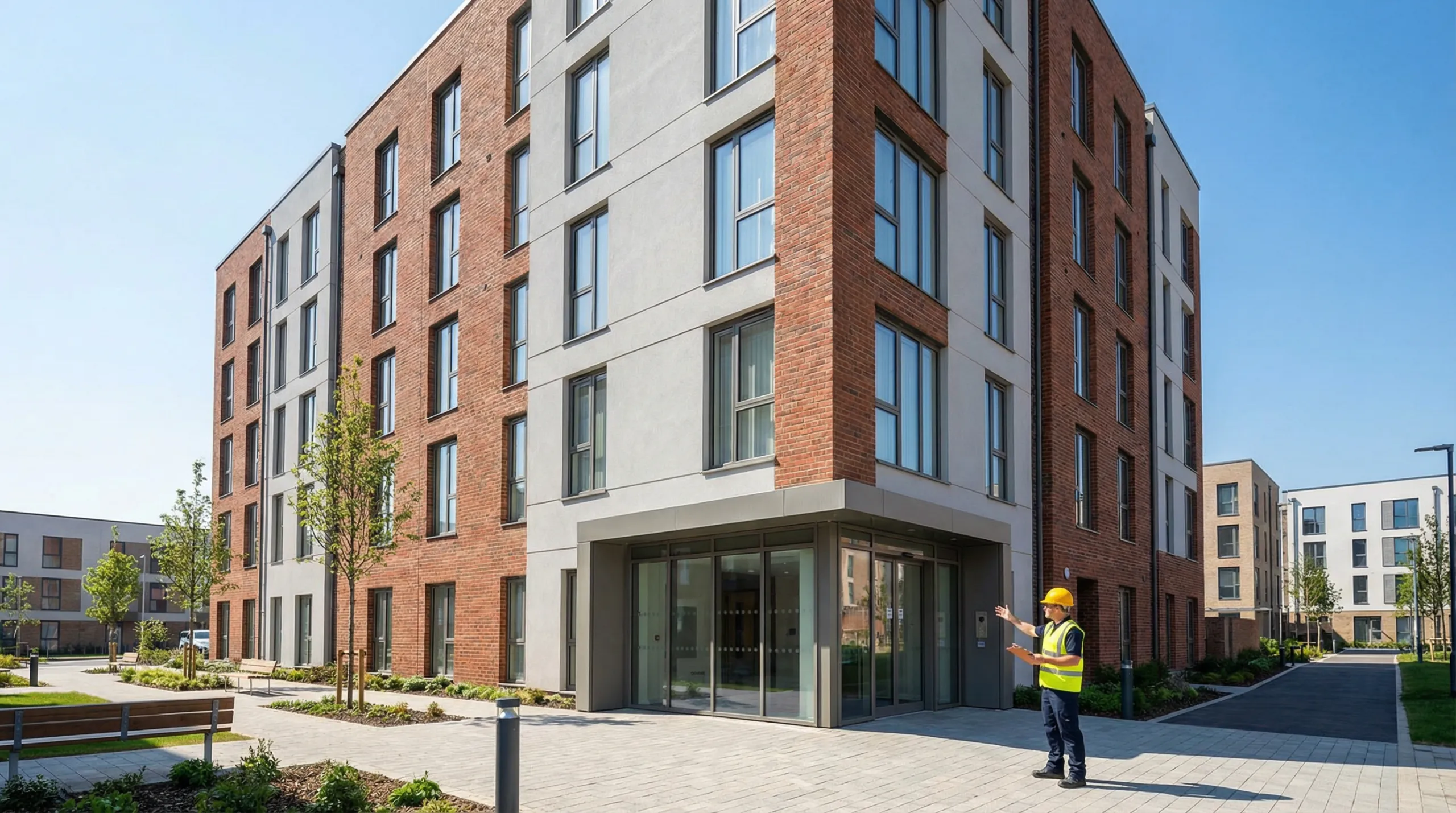
Serving Flats & Apartment Blocks Across the UK
We work with freeholders, managing agents, RTM companies, and landlords responsible for all types of residential blocks:
- Purpose-built blocks — from small 2-flat conversions to high-rise towers
- Converted houses — period properties converted into self-contained flats
- Mixed-use developments — commercial units below residential flats
- Sheltered housing — blocks with vulnerable or elderly residents
- Student accommodation — purpose-built and converted properties
Complete Fire Risk Assessment Package
Every flats fire risk assessment includes a comprehensive package designed to meet all current legislative requirements and best practice standards:
- Full communal areas inspection — corridors, stairwells, lobbies, bin stores, plant rooms, and all shared spaces
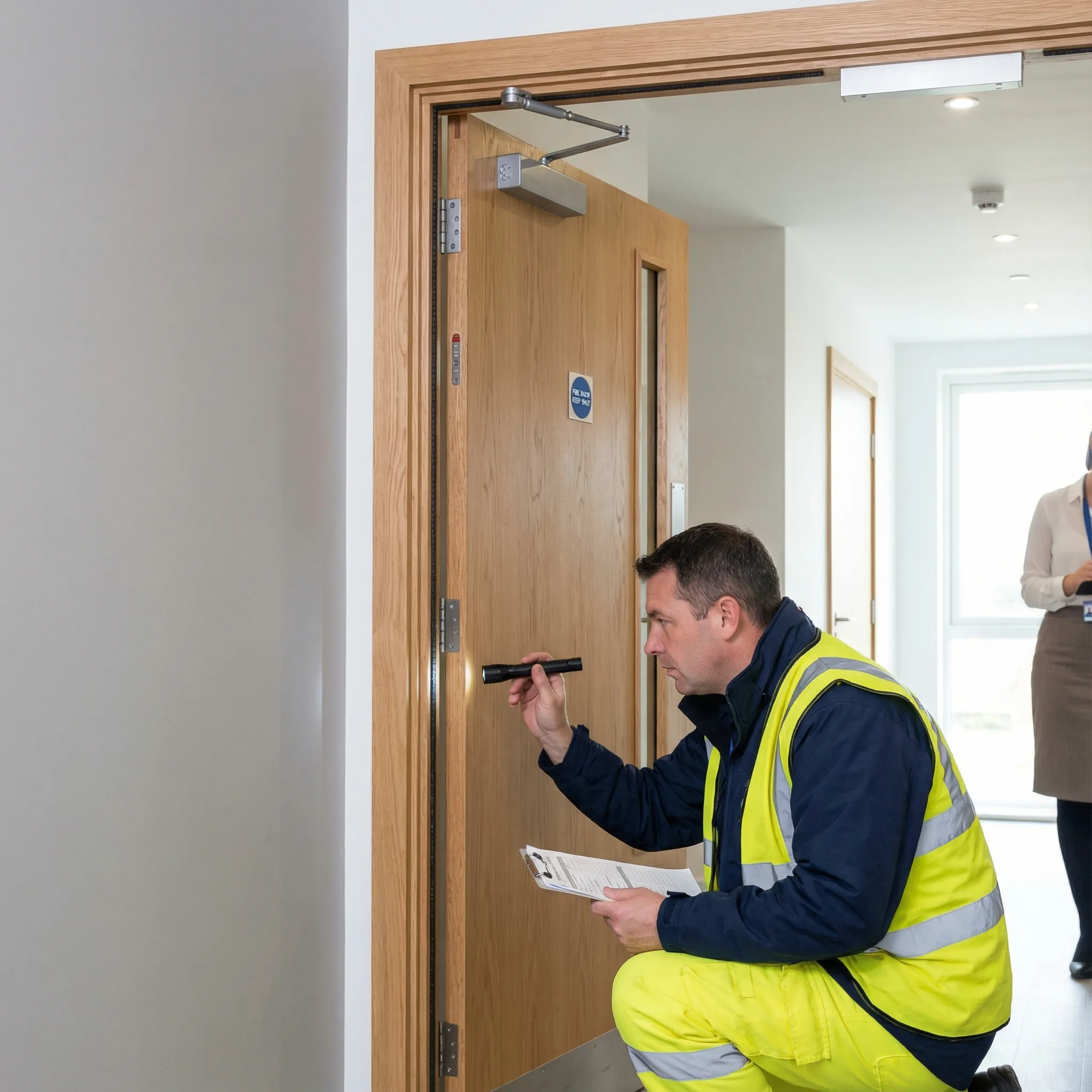
- Fire door survey — every communal and flat entrance door checked for compliance
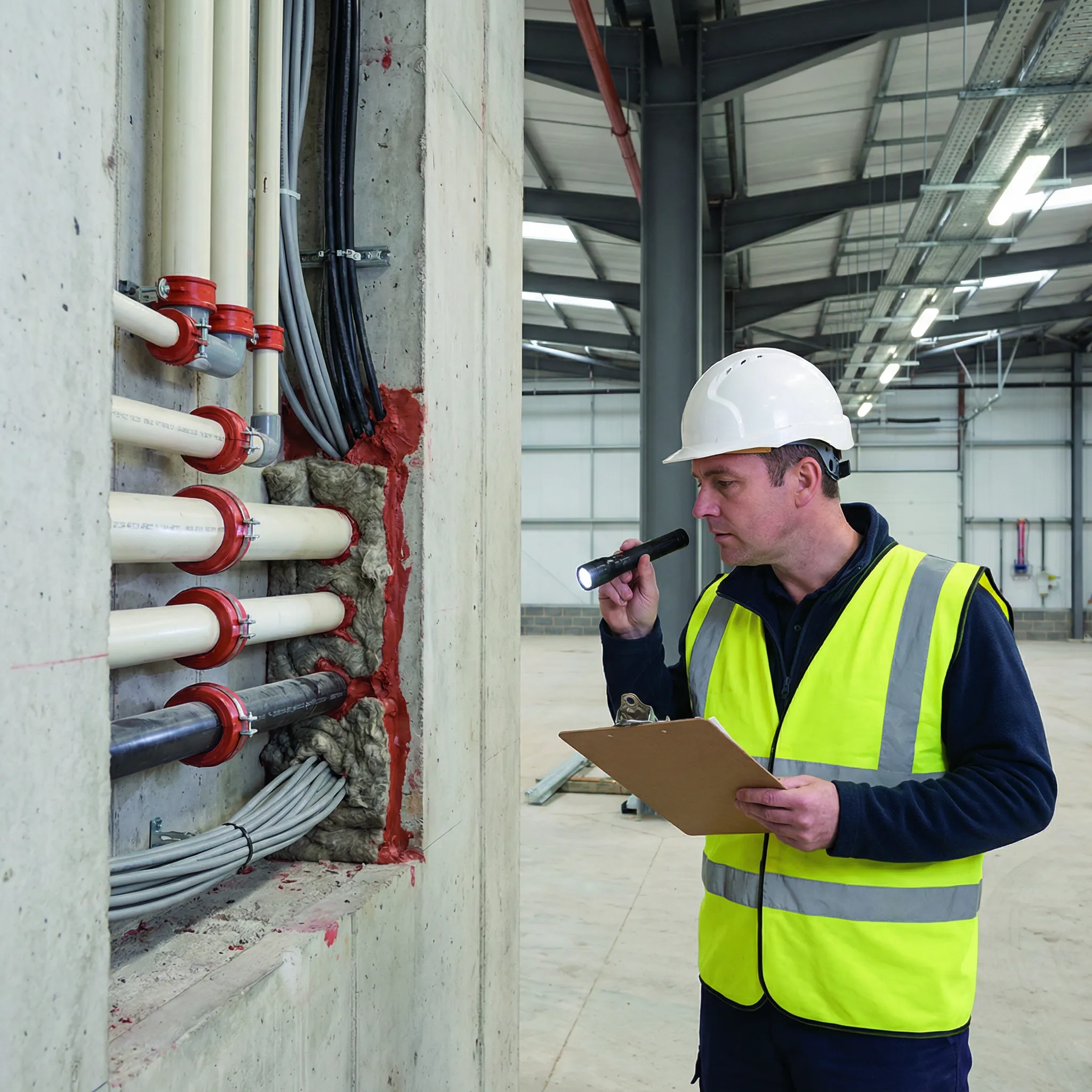
- Compartmentation review — fire stopping, cavity barriers, and structural fire separation
- External wall assessment — cladding, insulation, and balcony construction review
- Escape route evaluation — travel distances, emergency lighting, signage, and final exits
- Fire detection & alarm assessment — system adequacy, coverage, and maintenance
- Evacuation strategy review — stay-put vs simultaneous evacuation determination
- Detailed photographic report — BS 9792:2025 compliant with risk ratings and prioritised action plan
- Ongoing compliance support — guidance on implementing recommendations and review scheduling
Why Property Managers Choose Fire Assessment North
Property managers and freeholders across the UK trust us for their blocks because we understand the specific challenges of residential fire safety:
- 24-hour turnaround on standard assessments — minimising disruption to residents
- Same-day emergency assessments available for urgent compliance issues
- BAFE SP205 registered — independently audited and accredited
- BS 9792:2025 compliant — following the latest British Standard methodology
- Competitive pricing — transparent fees with no hidden costs
- Dedicated account management — single point of contact for multi-block portfolios
- Portfolio discounts — reduced rates for multiple blocks under management
Why Fire Risk Assessments for Flats Are Critical in 2025-2026
Post-Grenfell legislation has transformed fire safety requirements for residential blocks. Non-compliance now carries serious consequences.
Fire Safety Act 2021
Extended scope to external walls and flat entrance doors
Building Safety Act 2022
New duties for buildings over 18m (Section 156)
£14,556
Average enforcement fine for fire safety violations
The regulatory landscape has fundamentally changed. The Fire Safety Act 2021 clarified that fire risk assessments must now include external walls, balconies, and flat entrance doors. The Building Safety Act 2022 introduced the "Accountable Person" role for higher-risk buildings with stringent documentation requirements under Section 156. From August 2025, all assessments should follow the new BS 9792:2025 standard, and Residential PEEPs become mandatory for high-rise buildings from April 2026. Fire authorities are actively enforcing—over 10,000 enforcement actions were taken in 2024-2025 alone. Is your block compliant?
Our Comprehensive Flats Assessment Process
Thorough evaluations covering every aspect of fire safety required by current legislation and the new BS 9792:2025 standard.
Communal Areas Inspection
Complete assessment of corridors, stairwells, lobbies, bin stores, plant rooms, and any other shared spaces for fire hazards and escape route adequacy.
Fire Door Survey
Inspection of all communal fire doors and flat entrance doors—checking certification, gaps, seals, self-closers, and Fire Safety Regulations 2022 compliance.
Compartmentation Review
Assessment of fire stopping, cavity barriers, service penetrations, and compartment integrity to ensure fire and smoke cannot spread between flats.
External Wall Assessment
Fire Safety Act 2021 compliant review of external walls, cladding systems, insulation, and balcony construction where applicable.
Detailed Report Delivery
BS 9792:2025 compliant report with risk ratings, photographic evidence, prioritised action plan, and ongoing compliance recommendations within 24 hours.
Ongoing Support
Guidance on implementing recommendations, compliance timelines, and scheduling review assessments to maintain ongoing regulatory compliance.
6 Critical Fire Hazards in Flats We Assess
These specific risks require specialist knowledge of residential block fire safety that general assessors often miss.
External Walls & Cladding
Following the Grenfell Tower tragedy, the Fire Safety Act 2021 clarified that fire risk assessments must include external walls, including cladding, insulation, and balcony construction. Many blocks have combustible materials that were compliant when installed but now present unacceptable risks. External wall fires can spread rapidly, bypass internal compartmentation, and compromise evacuation strategies.
Our Assessment:
Visual external wall survey identifying cladding types and potential combustibility concerns, review of any existing EWS1 forms or FRAEW assessments, evaluation of balcony construction and attachments, assessment of compartmentation at external wall/floor junctions, and recommendations for specialist intrusive surveys where concerns are identified.
Fire Doors
Fire doors are your building's primary defence, containing fire and smoke within compartments to protect escape routes and give residents time to evacuate safely. The Fire Safety (England) Regulations 2022 introduced mandatory quarterly inspections of communal fire doors and annual inspections of flat entrance doors in buildings over 11 metres. Defective fire doors are the single most common enforcement issue.
Our Assessment:
Comprehensive fire door survey checking certification, fire rating (FD30/FD30S), door leaf condition, frame gaps (maximum 3mm), intumescent strips and smoke seals, self-closing device functionality, hinges, latches, and signage. We identify doors requiring replacement, remediation, or certification verification.
Compartmentation & Fire Stopping
Compartmentation divides buildings into fire-resistant sections, preventing fire and smoke spread between flats and protecting escape routes. Breaches commonly occur at service penetrations (pipes, cables, ventilation), within ceiling and wall voids, around meter cupboards, and where modifications have been made without proper fire stopping. In blocks relying on stay-put evacuation, compromised compartmentation can turn a contained flat fire into a building-wide emergency.
Our Assessment:
Visual inspection of accessible compartment lines including riser cupboards, service penetrations, ceiling voids, and structural junctions. We identify visible fire stopping deficiencies, missing cavity barriers, and areas requiring intrusive investigation.
Escape Routes & Emergency Lighting
Escape routes in residential blocks must be kept clear, adequately lit, and free from fire hazards at all times. Common issues include storage in corridors and stairwells, bicycles and pushchairs blocking routes, combustible materials increasing fire load, failed or inadequate emergency lighting, missing or incorrect fire safety signage, and locked or obstructed final exits.
Our Assessment:
Complete escape route evaluation including corridor widths, travel distances, stairwell protection, final exit adequacy, emergency lighting coverage and testing records, directional and fire action signage, housekeeping standards, and storage policy effectiveness.
Evacuation Strategy
The correct evacuation strategy is fundamental to resident safety, yet many blocks operate the wrong strategy for their building type. Purpose-built blocks with adequate compartmentation typically use 'stay put,' while converted buildings or those with compromised compartmentation often require 'simultaneous evacuation.' Using the wrong strategy can either cause unnecessary evacuation panic or leave residents in danger.
Our Assessment:
Determination of correct evacuation strategy based on building construction, compartmentation integrity, alarm system type, and resident vulnerability. We assess whether current resident information is accurate, review fire action notices, and evaluate alarm system configuration against strategy requirements.
Resident Fire Safety Information
Residents must understand what to do in a fire emergency—yet many blocks fail to provide clear, accurate information. Regulation 9 of the Fire Safety Order requires Responsible Persons to provide comprehensible fire safety information to all residents. Many blocks still display outdated notices with incorrect evacuation advice.
Our Assessment:
Review of all resident fire safety communications including fire action notices, welcome packs, signage, and ongoing communications. We verify information accuracy against actual building strategy, assess accessibility for residents with additional needs, and evaluate compliance with regulatory requirements.
How Much Does a Flats Fire Risk Assessment Cost?
Costs typically range from £200–£800 depending on building size, complexity, and assessment type required.
Factors affecting cost: Costs are influenced by number of flats, building height, type of assessment (Type 1–4), whether external wall assessment is needed, and turnaround requirements. Always verify BAFE SP205 registration and professional indemnity insurance.
Frequently Asked Questions
Common questions from freeholders, managing agents, RTM companies, and landlords about fire safety in residential blocks.
Who is responsible for fire risk assessment in a block of flats?
How often should fire risk assessments be reviewed for flats?
What is included in a fire risk assessment for flats?
What are the fire door inspection requirements for flats?
What is BS 9792:2025 and how does it affect assessments?
What are Residential PEEPs and when do they come into force?
Do all blocks of flats need a fire risk assessment?
What is the difference between stay put and simultaneous evacuation?
What are the penalties for not having a fire risk assessment?
How much does a fire risk assessment cost for a block of flats?
Ready to Get Your Fire Risk Assessment for Flats?
Professional service from BAFE-accredited engineers. 24-hour turnaround. From £200 + VAT.