Fire Risk Assessment
UKAS Accredited Assessors
Professional fire risk assessments compliant with the Regulatory Reform (Fire Safety) Order 2005. UKAS accredited assessors, 24-hour report delivery, and full PAS 79 compliance.

What is a Fire Risk Assessment?
Definition
A fire risk assessment is a systematic evaluation of your premises to identify fire hazards, assess risks to people, and determine what fire safety measures are needed. It is a legal requirement under the Regulatory Reform (Fire Safety) Order 2005 for all non-domestic premises in England and Wales.
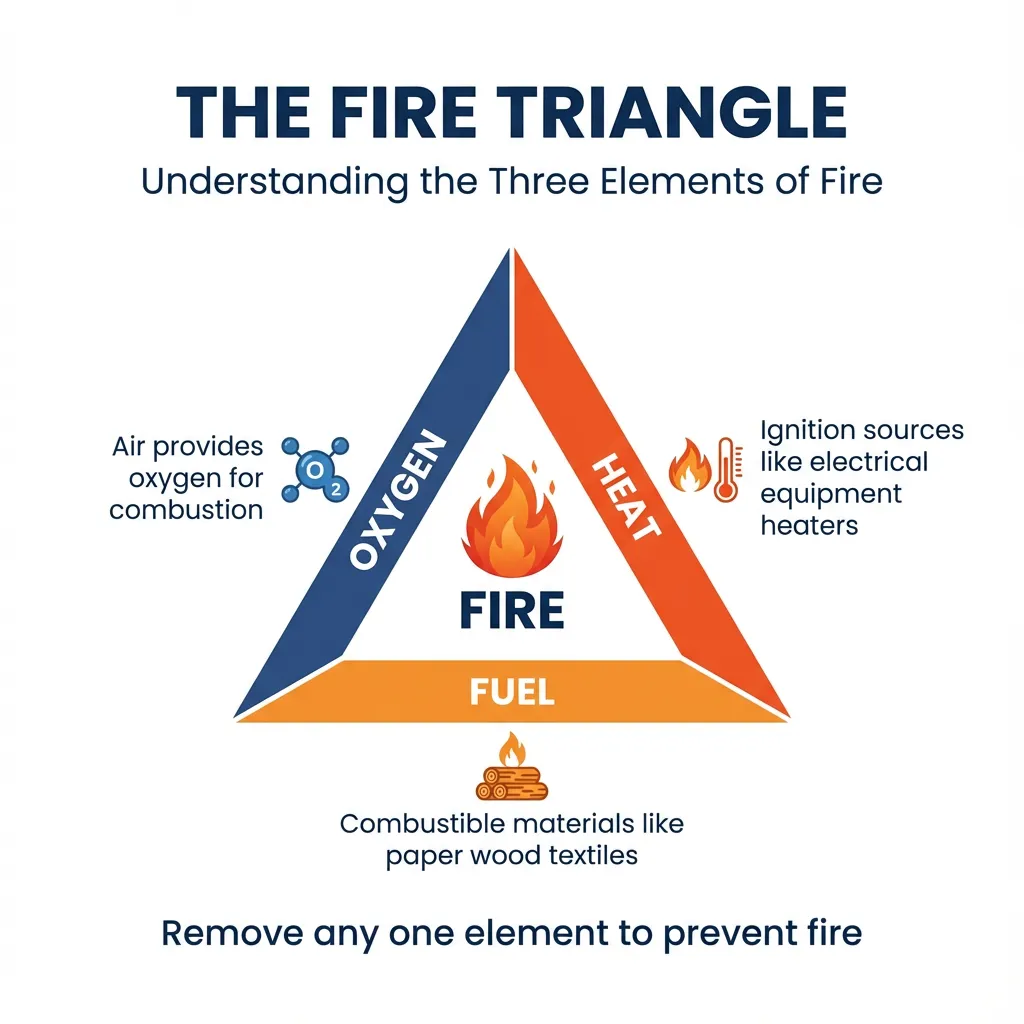
The purpose of a fire risk assessment is to ensure that everyone in your building can escape safely in the event of a fire. It examines potential sources of ignition, fuel, and oxygen (the fire triangle), identifies who might be at risk, and evaluates whether existing fire safety measures are adequate.
What Does a Fire Risk Assessment Include?
A comprehensive fire risk assessment examines:
- Fire hazards: Sources of ignition (electrical equipment, heating, cooking), fuel sources (paper, textiles, flammable liquids), and oxygen sources
- People at risk: Employees, visitors, contractors, and especially vulnerable people who may need assistance evacuating
- Fire detection and warning systems: Smoke detectors, fire alarms, and their maintenance
- Escape routes: Emergency exits, corridors, stairways, and external routes
- Fire doors: Their condition, certification, and proper operation
- Emergency lighting: Functionality and coverage
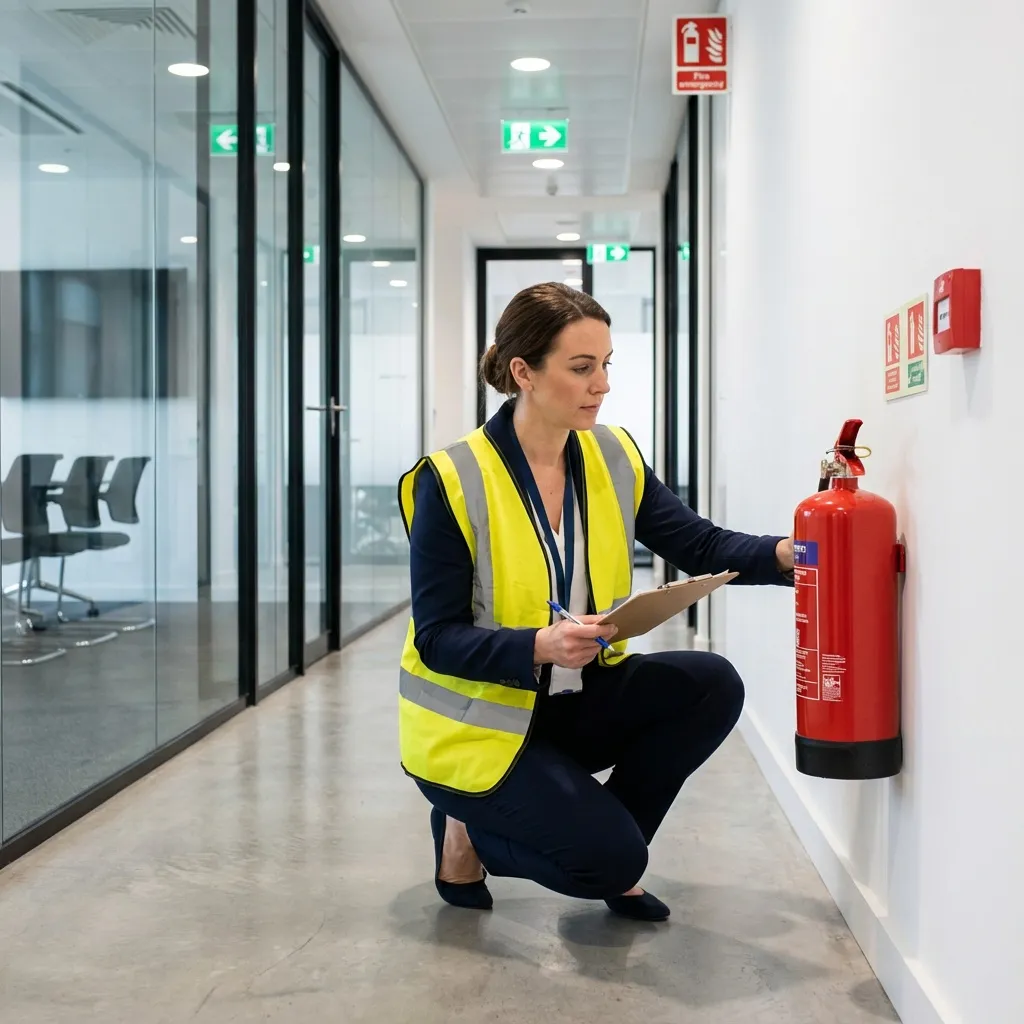
- Firefighting equipment: Fire extinguishers, blankets, and sprinkler systems
- Signage: Fire exit signs, fire action notices, and assembly point signs
- Staff training: Fire safety awareness and evacuation procedures
Key Requirements for 2026
- Written fire risk assessment required for all premises with 2+ domestic units (Building Safety Act 2022)
- Quarterly fire door checks in buildings over 11 metres
- External wall assessments for high-rise buildings
- Personal Emergency Evacuation Plans (PEEPs) for residents who need assistance (from April 2026)
- Assessor competency requirements under BS 8674:2025
Types of Fire Risk Assessment
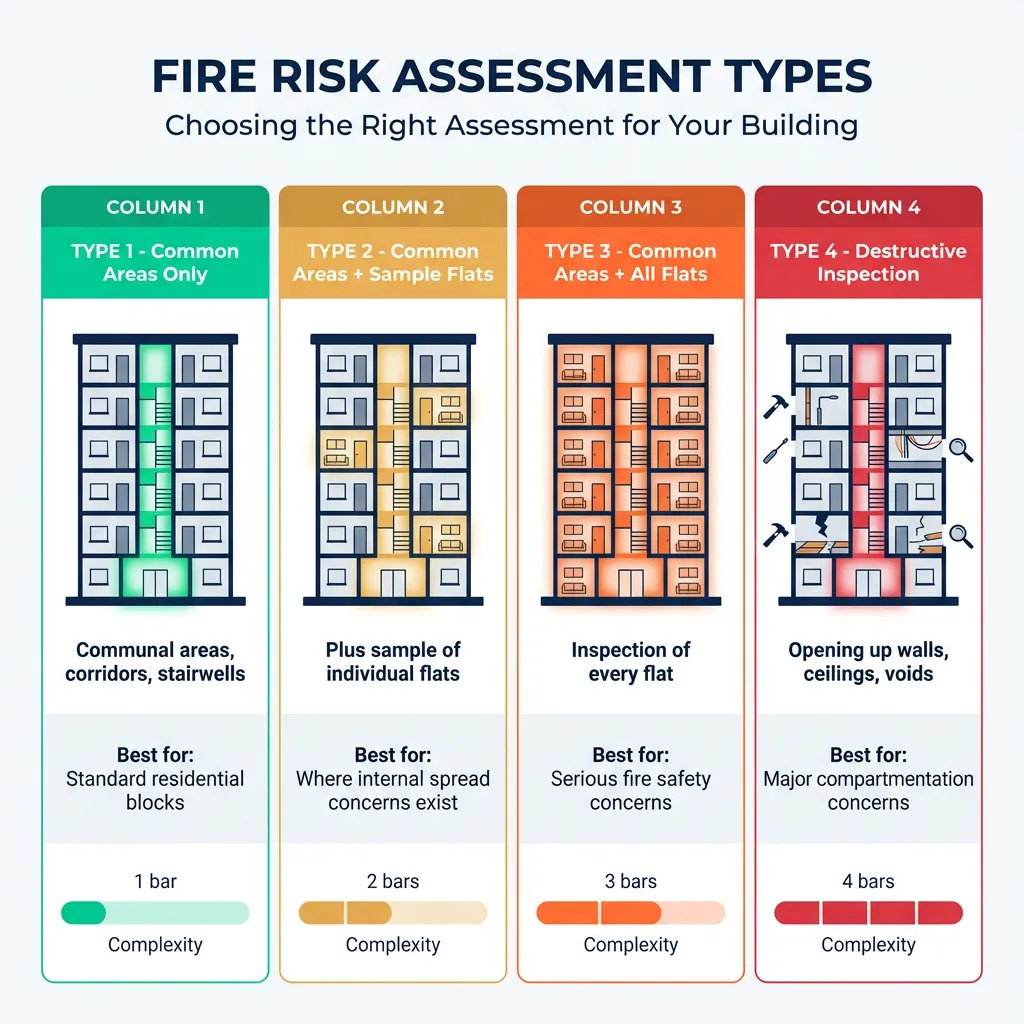
Fire risk assessments are categorised into four types under PAS 79-1:
- Type 1 – Common Areas Only: Assesses communal parts without inspecting flats. Suitable for most residential blocks.
- Type 2 – Common Areas + Sample Flats: Includes inspection of a sample of flats to assess fire spread risks.
- Type 3 – Common Areas + All Flats: Full inspection of every flat. Required where serious concerns exist.
- Type 4 – Destructive Inspection: Includes opening up construction to inspect hidden voids and compartmentation.
For commercial premises, the type depends on complexity and risk level. Simple offices may need only a basic assessment, while industrial premises with hazardous materials require more detailed evaluation.
Who Needs a Fire Risk Assessment?
Under UK law, almost all premises other than single private dwellings require a fire risk assessment.
You Need a Fire Risk Assessment If You Have:
Residential buildings
Blocks of flats (communal areas), HMOs, care homes, hotels, B&Bs
Any premises employing staff
Even home-based businesses with employees
Exemptions
The only properties exempt from fire risk assessment requirements are single private dwellings where the occupants are not employees. However, if you run a business from home, have lodgers, or have converted your property into multiple units, you will need an assessment.
The 5 Steps of Fire Risk Assessment
The government's official 5-step approach to conducting a fire risk assessment, as outlined in fire safety guidance.
Identify Fire Hazards
Identify sources of ignition (heaters, electrical equipment), fuel (paper, textiles, flammable substances), and oxygen. Consider work processes and activities.
Identify People at Risk
Consider employees, visitors, contractors, and vulnerable people including those with disabilities, elderly, children, or those unfamiliar with the premises.
Evaluate & Reduce Risks
Assess whether existing fire safety measures are adequate. Remove or reduce hazards where possible. Implement additional controls where needed.
Record & Plan
Record significant findings. Prepare an emergency evacuation plan. Provide fire safety training to all staff. Document all fire safety measures.
Review Regularly
Review annually or after significant changes, fire incidents, or near misses. Update the assessment whenever the building use or layout changes.
Fire Risk Assessment Costs UK 2026
Transparent pricing for fire risk assessments. Costs vary based on building size, complexity, and risk level.
Factors affecting cost: Costs are influenced by building size (larger premises take longer), complexity (multiple floors, unusual layouts), risk level (high-risk activities, hazardous materials), type of assessment (Type 1-4 for residential), and location.
UK Fire Safety Legislation 2026
Understanding the legal framework for fire risk assessments, including recent updates from the Building Safety Act and new British Standards.
Regulatory Reform (Fire Safety) Order 2005
The foundation of UK fire safety law. Requires the responsible person to carry out a fire risk assessment and implement appropriate fire safety measures. Applies to all non-domestic premises in England and Wales.
Fire Safety Act 2021
Clarified that the Fire Safety Order applies to the structure, external walls, and flat entrance doors of multi-occupied residential buildings. Post-Grenfell legislation addressing cladding and external wall fire risks.
Building Safety Act 2022 (Section 156)
Required full written fire risk assessments for all buildings with two or more domestic premises. Enhanced recording requirements and cooperation duties between multiple responsible persons.
Fire Safety (England) Regulations 2022
Introduced quarterly fire door checks (11m+ buildings), information boxes with floor plans (18m+ buildings), external wall information sharing, and monthly firefighting equipment checks for high-rise.
BS 8674:2025 – Assessor Competency
New British Standard establishing three-tier competency framework for fire risk assessors: Foundation (low-risk), Intermediate (moderate-risk), and Advanced (high-risk/complex buildings).
BS 9792:2025 – Housing Assessments
Replaced PAS 79-2:2020. New standard for fire risk assessments in housing including purpose-built flats, converted flats, and HMOs. Standardised pro forma and 9-step assessment process.
Residential PEEPs Regulations
Personal Emergency Evacuation Plans become mandatory for high-rise residential buildings. Requires identifying residents needing assistance, conducting Person-Centred Fire Risk Assessments, and creating individual evacuation plans.
Frequently Asked Questions
Common questions about fire risk assessments answered by our experts.
What is a fire risk assessment?
Who needs a fire risk assessment UK?
How much does a fire risk assessment cost?
How often should a fire risk assessment be reviewed?
Can I do my own fire risk assessment?
What are the penalties for not having one?
Ready to Get Your Fire Risk Assessment?
Professional service from BAFE-accredited engineers. 24-hour turnaround. From £150 + VAT.