Fire Alarm Testing
BS 5839 Certified Testing
Professional fire alarm testing and servicing by BAFE registered engineers in accordance with BS 5839-1. Compliance certificate included with every visit.
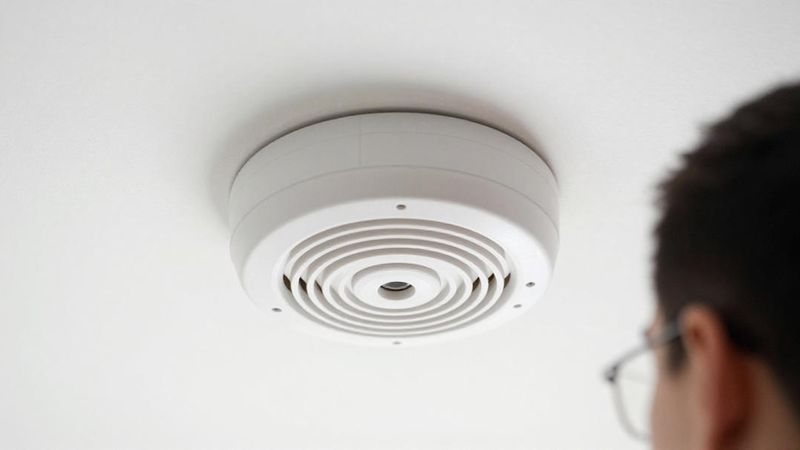
What is Fire Alarm Testing?
Fire alarm testing is a structured inspection and service of your fire detection and alarm system. We check every part of your system — detectors, call points, sounders, wiring, and the control panel. If a fire starts, your alarm needs to detect it and warn everyone in the building. Testing confirms that it will.
All fire alarm testing in the UK must follow BS 5839-1:2017, the British Standard for fire detection and alarm systems. The Regulatory Reform (Fire Safety) Order 2005 makes this a legal duty for the responsible person.
What Our Fire Alarm Testing Includes
- Control panel inspection — full functional test of zone indicators, fault conditions, and communication with all connected devices
- Detector and call point testing — every detector and manual call point individually tested for correct activation and response
- Sounder and visual alarm verification — all sounders, bells, and visual alarm devices checked across their coverage area
- Battery backup testing — standby batteries tested under load to verify they can power the system during mains failure
- Log book completion — fire alarm log book completed on-site, recording all tests and faults found
- Fault identification and reporting — any faults documented with clear recommendations and priority levels
- Certificate of compliance — confirming your system has been tested to BS 5839-1:2017
Fire Alarm Testing Schedule
| Frequency | What is Tested | Who Should Do It |
|---|---|---|
| Weekly | One manual call point (rotating zones) | Trained on-site staff |
| Monthly | Visual check of all devices and panel | Trained on-site staff |
| Quarterly | Functional test of detectors (rotating) | Trained staff or engineer |
| Six-monthly | Full professional service and inspection | Qualified fire alarm engineer |
| Annually | Comprehensive BS 5839 inspection | Qualified fire alarm engineer |
Fire Alarm Categories (BS 5839-1)
BS 5839-1 classifies fire alarm systems into categories based on their purpose:
- Category M — Manual-only systems. No automatic detection. Only suitable for very small, simple premises.
- Category L (Life Protection) — L1 (full building detection), L2 (defined high-risk areas), L3 (escape routes only), L4 (escape routes in dwellings), L5 (specific locations per fire risk assessment).
- Category P (Property Protection) — P1 (full building detection), P2 (defined high-risk areas).
Most commercial buildings need at least a Category L2 or L3 system. HMOs and care homes typically require L1.
System Types
- Conventional — Zone-based systems dividing a building into numbered areas. Common in smaller buildings.
- Addressable — Each device has a unique digital address for precise identification. Standard for larger buildings.
- Wireless — Radio frequency systems for listed buildings and premises where cabling is impractical.
Arrange fire alarm testing today.
Who Needs a Fire Risk Assessment?
Under the Regulatory Reform (Fire Safety) Order 2005, the responsible person for any non-domestic premises must ensure fire detection systems are maintained in good working order.
You Need a Fire Risk Assessment If You Have:
Commercial premises
Offices, shops, warehouses, restaurants, and all non-domestic buildings
Residential buildings
Blocks of flats, HMOs, care homes, and student accommodation
Healthcare premises
Hospitals, GP surgeries, dental practices, and care facilities
Public buildings
Community centres, libraries, churches, and sports facilities
Exemptions
Single private dwellings (houses) are exempt from commercial fire alarm testing requirements. However, Houses in Multiple Occupation (HMOs), blocks of flats, and all non-domestic premises must have fire alarm systems tested and maintained.
Our Fire Alarm Testing Process
A structured 5-step approach to fire alarm testing, from booking to BS 5839 compliance certification.
Book Your Test
Call us or fill in the form. We schedule around your operations to minimise disruption.
Engineer Arrives
A BAFE registered engineer arrives at your premises with all necessary testing equipment.
System Tested
Every device, circuit, and panel function is tested to BS 5839-1:2017 standards.
Report Delivered
Detailed report with any faults found, recommendations, and priority levels within 24 hours.
Certificate Issued
BS 5839 compliance certificate issued and log book completed on-site.
Fire Alarm Testing Costs UK 2026
What you pay depends on the size of your system and the complexity of the building.
Factors affecting cost: Several factors affect the price: the number of devices on the system, building access requirements, system age and condition, and whether any parts need replacing. Annual maintenance contracts typically save 15-20% compared to individual bookings.
Fire Alarm Testing Legislation & Standards 2026
The legal and regulatory framework governing fire alarm testing in the UK.
Regulatory Reform (Fire Safety) Order 2005
Requires the responsible person to ensure fire detection and warning systems are maintained in good working order. The foundation of UK fire safety law for non-domestic premises.
BS 5839-1:2017
The British Standard for fire detection and alarm systems in non-domestic premises. Defines design, installation, commissioning, and maintenance requirements including testing frequencies.
Fire Safety Act 2021
Clarified that the Fire Safety Order applies to the structure and fire safety systems of multi-occupied residential buildings, including fire alarm systems.
Fire Safety (England) Regulations 2022
Introduced additional requirements for information sharing about fire safety systems in high-rise residential buildings, including fire alarm system documentation.
Building Safety Act 2022
Enhanced requirements for fire safety documentation and system maintenance in higher-risk buildings under the Building Safety Regime.
Residential PEEPs Regulations
Personal Emergency Evacuation Plans become mandatory for high-rise residential buildings, requiring fire alarm systems to support person-centred evacuation procedures.
Frequently Asked Questions
Common questions about fire alarm testing answered by our experts.
How often should fire alarms be tested?
What is BS 5839 fire alarm testing?
Who is responsible for fire alarm testing?
How long does a fire alarm test take?
What happens if you don't test your fire alarm?
Do fire alarms need annual certification?
Ready to Get Your Fire Alarm Testing?
Professional service from BAFE-accredited engineers. 24-hour turnaround. From £80.