Fire Risk Assessment in
Rochdale
Professional fire risk assessments across Rochdale and the surrounding areas. BAFE SP205 registered assessors, 24-hour report delivery, and full compliance with UK fire safety legislation.
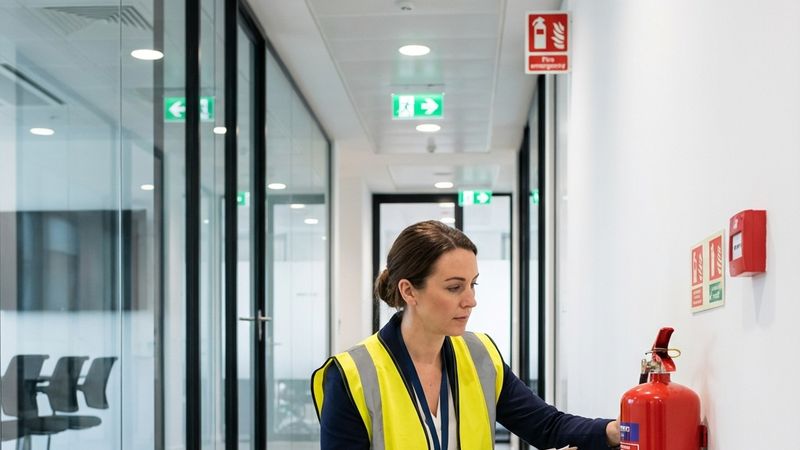
Fire Assessment North provides professional fire risk assessments to businesses and property owners throughout Rochdale and the surrounding areas. Our BAFE SP205 registered assessors deliver thorough assessments with industry-leading 24-hour report turnaround.
Rochdale presents unique fire safety challenges. The borough combines a historic town centre with industrial heritage sites, suburban commercial areas in Heywood and Middleton, and rural communities around Littleborough and Hollingworth Lake. From Rochdale town centre’s regeneration area to the industrial estates of Pilsworth, our assessors understand the specific fire risks that Rochdale properties present.
Key Requirements for Rochdale Properties
- Fire Safety Order 2005 — written fire risk assessments mandatory for all non-domestic premises
- Building Safety Act 2022 — enhanced requirements for high-rise residential buildings over 18 metres
- HMO licensing — additional fire safety requirements for licensed HMO properties under Rochdale Council
- Greater Manchester Fire and Rescue — local enforcement authority for the Rochdale borough
Serving Rochdale Businesses
We work with a wide range of premises across Rochdale, including offices in the town centre, retail units on Drake Street, restaurants in Littleborough, hotels in Middleton, residential blocks throughout the borough, and industrial units in Heywood. Whether you’re a small business or managing a large portfolio, we can help.
Areas We Cover Across Rochdale
Fire risk assessments available throughout the Rochdale borough with rapid response times.
Rochdale Town Centre
Drake Street, Yorkshire Street, The Butts, Smith Street, Tweedale Street
Heywood & South
Heywood, Hopwood, Pilsworth, Castleton, Birch
Middleton & West
Middleton, Alkrington, Langley, Bowlee, Rhodes
Milnrow & East
Milnrow, Newhey, Firgrove, Smallbridge, Wardle
Littleborough & North
Littleborough, Smithy Bridge, Summit, Hollingworth Lake, Calderbrook
How Our Rochdale Fire Risk Assessment Works
From initial enquiry to comprehensive report in as little as 48 hours.
Get Your Quote
Use our instant calculator or call for a tailored quote for your Rochdale property.
Book Assessment
Choose a convenient time. Appointments available within 48-72 hours.
Site Visit
Our BAFE assessor conducts a thorough on-site evaluation of your premises.
Report Delivery
Receive your comprehensive, legally-compliant report within 24 hours.
Ongoing Support
We help implement recommendations and offer annual reviews.
Why Rochdale Businesses Choose Fire Assessment North
Deep local expertise combined with outstanding service
BAFE SP205 Registered
All assessors meet the highest industry competency standards, verified by UKAS-accredited certification.
24-Hour Report Delivery
Receive your comprehensive, legally-compliant report within 24 hours of your site assessment.
Local Rochdale Knowledge
Assessors who know Rochdale's industrial heritage buildings, town centre properties, and rural premises.
Competitive Pricing
Transparent, upfront pricing with no hidden fees. Starting from just £150 + VAT.
Full Regulatory Compliance
Assessments compliant with Fire Safety Order 2005, Building Safety Act 2022, and PAS 79 methodology.
Ongoing Support
We help implement recommendations, provide annual reviews, and support you through enforcement action.
One partner for all your property compliance needs
Fire Safety & Compliance Services in Rochdale

What is a Fire Risk Assessment? Definition A fire risk assessment is a systematic evaluation of your premises to identify fire hazards, assess risks to people, and determine what fire safety measures are needed. It is a legal requirement under the Regulatory Reform (Fire Safety) Order 2005 for all non-domestic premises in England and Wales. The purpose of a fire risk assessment is to ensure that everyone in your building can escape safely in the event of a fire. It examines potential sources of ignition, fuel, and oxygen (the fire triangle), identifies who might be at risk, and evaluates whether existing fire safety measures are adequate.What Does a Fire Risk Assessment Include? A comprehensive fire risk assessment examines:Fire hazards: Sources of ignition (electrical equipment, heating, cooking), fuel sources (paper, textiles, flammable liquids), and oxygen sources People at risk: Employees, visitors, contractors, and especially vulnerable people who may need assistance evacuating Fire detection and warning systems: Smoke detectors, fire alarms, and their maintenance Escape routes: Emergency exits, corridors, stairways, and external routes Fire doors: Their condition, certification, and proper operation Emergency lighting: Functionality and coverage Firefighting equipment: Fire extinguishers, blankets, and sprinkler systems Signage: Fire exit signs, fire action notices, and assembly point signs Staff training: Fire safety awareness and evacuation proceduresKey Requirements for 2026Written fire risk assessment required for all premises with 2+ domestic units (Building Safety Act 2022) Quarterly fire door checks in buildings over 11 metres External wall assessments for high-rise buildings Personal Emergency Evacuation Plans (PEEPs) for residents who need assistance (from April 2026) Assessor competency requirements under BS 8674:2025Types of Fire Risk Assessment Fire risk assessments are categorised into four types under PAS 79-1:Type 1 – Common Areas Only: Assesses communal parts without inspecting flats. Suitable for most residential blocks. Type 2 – Common Areas + Sample Flats: Includes inspection of a sample of flats to assess fire spread risks. Type 3 – Common Areas + All Flats: Full inspection of every flat. Required where serious concerns exist. Type 4 – Destructive Inspection: Includes opening up construction to inspect hidden voids and compartmentation.For commercial premises, the type depends on complexity and risk level. Simple offices may need only a basic assessment, while industrial premises with hazardous materials require more detailed evaluation.
Read More Fire Risk Assessment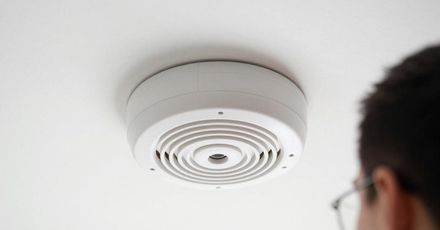
What is Fire Alarm Testing? Fire alarm testing is a structured inspection and service of your fire detection and alarm system. We check every part of your system — detectors, call points, sounders, wiring, and the control panel. If a fire starts, your alarm needs to detect it and warn everyone in the building. Testing confirms that it will. All fire alarm testing in the UK must follow BS 5839-1:2017, the British Standard for fire detection and alarm systems. The Regulatory Reform (Fire Safety) Order 2005 makes this a legal duty for the responsible person. What Our Fire Alarm Testing IncludesControl panel inspection — full functional test of zone indicators, fault conditions, and communication with all connected devices Detector and call point testing — every detector and manual call point individually tested for correct activation and response Sounder and visual alarm verification — all sounders, bells, and visual alarm devices checked across their coverage area Battery backup testing — standby batteries tested under load to verify they can power the system during mains failure Log book completion — fire alarm log book completed on-site, recording all tests and faults found Fault identification and reporting — any faults documented with clear recommendations and priority levels Certificate of compliance — confirming your system has been tested to BS 5839-1:2017Fire Alarm Testing ScheduleFrequency What is Tested Who Should Do ItWeekly One manual call point (rotating zones) Trained on-site staffMonthly Visual check of all devices and panel Trained on-site staffQuarterly Functional test of detectors (rotating) Trained staff or engineerSix-monthly Full professional service and inspection Qualified fire alarm engineerAnnually Comprehensive BS 5839 inspection Qualified fire alarm engineerFire Alarm Categories (BS 5839-1) BS 5839-1 classifies fire alarm systems into categories based on their purpose:Category M — Manual-only systems. No automatic detection. Only suitable for very small, simple premises. Category L (Life Protection) — L1 (full building detection), L2 (defined high-risk areas), L3 (escape routes only), L4 (escape routes in dwellings), L5 (specific locations per fire risk assessment). Category P (Property Protection) — P1 (full building detection), P2 (defined high-risk areas).Most commercial buildings need at least a Category L2 or L3 system. HMOs and care homes typically require L1. System TypesConventional — Zone-based systems dividing a building into numbered areas. Common in smaller buildings. Addressable — Each device has a unique digital address for precise identification. Standard for larger buildings. Wireless — Radio frequency systems for listed buildings and premises where cabling is impractical.Arrange fire alarm testing today.
Read More Fire Alarm Testing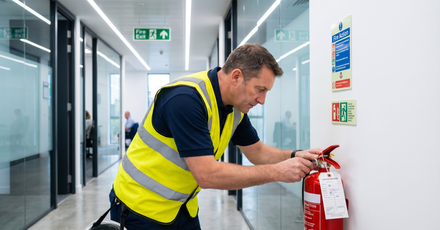
What is Fire Extinguisher Servicing? Fire extinguisher servicing is a structured inspection and service of every portable fire extinguisher on your premises. The purpose is to confirm each unit is charged, accessible, undamaged, and will work when someone reaches for it during a fire. All fire extinguisher servicing in the UK must follow BS 5306-3:2017, the British Standard covering the commissioning, maintenance, and safe use of portable fire extinguishers. The Regulatory Reform (Fire Safety) Order 2005 places a legal duty on the responsible person to keep firefighting equipment in working order. What Our Fire Extinguisher Service IncludesVisual inspection of each extinguisher for damage, corrosion, and correct placement Weight and pressure check against manufacturer specifications Hose, nozzle, and horn inspection for cracks, blockages, or deterioration Discharge test and recharge during extended service intervals Safety pin, tamper seal, and operating instructions check Label and signage check to confirm correct identification and BS compliance Wall bracket and cabinet mounting inspection Replacement recommendations for any unit beyond economical repair Service label applied to each extinguisher on completion Certificate of compliance issued for your recordsFire Extinguisher Service ScheduleFrequency What is Checked Who Should Do ItMonthly Visual check: location, gauge, seals, damage Trained on-site staffAnnually Full BS 5306-3 basic service Qualified engineerEvery 5 years Extended service (water, foam, powder, wet chem) Qualified engineerEvery 10 years Extended service (CO2) Qualified engineerExtinguisher Types We ServiceWater (Red label) — Class A fires: wood, paper, textiles. Extended service every 5 years. Foam / AFFF (Cream label) — Class A and B fires: flammable liquids. Extended service every 5 years. CO2 (Black label) — Class B fires and electrical equipment. Extended service every 10 years including hydraulic pressure test. Dry Powder (Blue label) — Class A, B, and C fires including flammable gases. Extended service every 5 years. Wet Chemical (Yellow label) — Class F fires: cooking oils and fats. Standard in commercial kitchens. Extended service every 5 years.If a unit fails its service or is beyond economical repair, we replace it on the spot from our van stock. No second visit required. Book fire extinguisher servicing today.
Read More Fire Extinguisher Servicing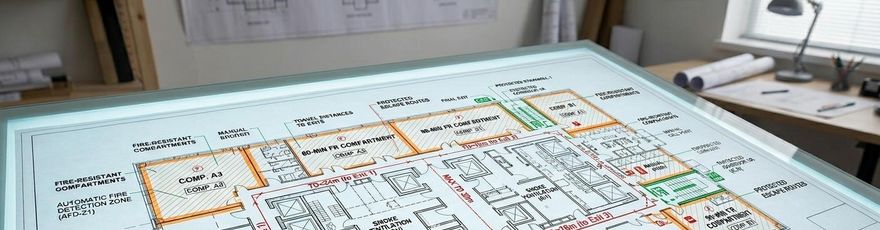
What is a Fire Strategy? A fire strategy is a comprehensive technical document that outlines all fire safety measures for a building project. Unlike fire risk assessments which evaluate existing conditions, fire strategies are proactive planning documents essential for new construction, major refurbishments, and change of use projects. Fire Strategy vs Fire Risk Assessment Fire Strategy Fire Risk Assessment Purpose Building design compliance Operational safety evaluation When Design/construction phase Operational buildings Focus Proactive planning Current risk identification Required for Building Regulations approval All non-domestic premises Scope Comprehensive building design Existing conditions assessment Outcome Design documentation Risk mitigation actionsWhat's Included in a Fire Strategy A comprehensive fire strategy covers:Means of warning and escape — fire detection, alarm systems, escape route design, and evacuation strategy Internal fire spread — compartmentation, fire resisting construction, and fire stopping External fire spread — façade fire performance, boundary distances, and roof coverings Access and facilities for the fire service — fire engine access, water supplies, and firefighting lifts Smoke control systems — ventilation, pressurisation, and smoke extraction design Structural fire protection — fire resistance periods and structural steel protection Fire safety management procedures — ongoing management responsibilities and maintenance schedulesWhen You Need a Fire StrategyNew build developments Major refurbishments and extensions Change of use applications Building regulation approvals Complex or high-rise buildings Higher-risk building gateway submissionsFire Strategy Service Categories Residential Development Fire Strategies — Specialised fire strategies for apartment blocks, student accommodation, and mixed-use developments including evacuation strategy planning, compartmentation design, smoke control systems, and resident safety management. Commercial Building Fire Strategies — Comprehensive fire strategies for offices, retail, and commercial developments including occupancy load calculations, business continuity planning, fire service access optimisation, and active system integration. Industrial Facility Fire Strategies — Specialised fire strategies for manufacturing, warehousing, and industrial facilities including hazardous material considerations, process-specific fire risks, emergency response planning, and asset protection strategies. Healthcare & Education Fire Strategies — Expert fire strategies for hospitals, schools, and care facilities including vulnerable occupant provisions, phased evacuation planning, and medical equipment protection. Get in touch to discuss your fire strategy requirements.
Read More Fire Strategy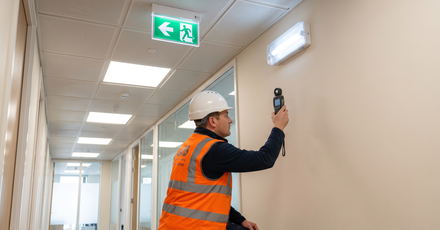
What is Emergency Light Testing? Emergency light testing checks that your emergency lighting activates when the mains power fails and keeps escape routes lit long enough for everyone to get out. When a fire knocks out the power, emergency lighting is the only thing standing between your occupants and total darkness. All emergency lighting in UK non-domestic premises must meet BS 5266-1:2016, the British Standard for emergency lighting. The Regulatory Reform (Fire Safety) Order 2005 makes it a legal duty for the responsible person to keep these systems maintained and tested. What Our Emergency Light Testing IncludesFunctional test of every luminaire and illuminated exit sign Battery condition check on all self-contained units Full-duration discharge test (annual visits — 3 hours or 1 hour as applicable) Lamp and LED condition inspection — light output and lens clarity Charging system verification — confirming units recharge correctly after testing Central battery system checks where fitted — charger output and cell condition Log book completion on-site with full test records Compliance certificate issued on completion, accepted by fire authorities and insurersFaults found during testing are documented with clear recommendations. We carry common replacement batteries and lamps on every van, so most repairs are done in the same visit. Emergency Lighting Test ScheduleFrequency Test Type Duration Who Should Do ItMonthly Functional flash test 30 seconds Trained on-site staffQuarterly Visual inspection N/A Trained on-site staffAnnually Full-duration discharge 3 hours (or 1hr) Qualified engineerTypes of Emergency LightingMaintained — Run continuously during normal operation and switch to battery power when mains fails. Common above final exits and in theatres and cinemas. Non-maintained — Only activate when the mains supply drops out. The most common type in offices and commercial buildings. Because they are not lit day-to-day, monthly testing is essential. Sustained — Dual-function fittings with a standard lamp on mains and an emergency lamp on battery backup.Self-contained vs Central Battery Systems Self-contained units have individual batteries built into each luminaire. Cheaper to install but each unit must be tested individually. Central battery systems run all emergency lights from a single battery bank, usually in a plant room. Easier to maintain in large buildings but more complex to test. Arrange emergency light testing today.
Read More Emergency Light Testing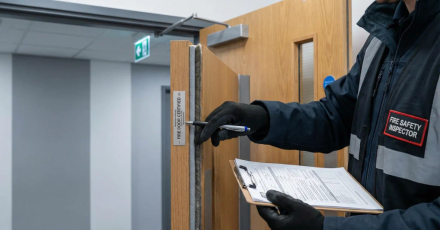
What is a Fire Door Inspection? A fire door inspection is a systematic inspection of every fire door in a building to confirm it will perform as rated during a fire. An FD30-rated door must hold back fire and smoke for 30 minutes. An FD60-rated door must hold for 60 minutes. The inspection checks whether each door can still deliver that protection. Under Regulation 10 of the Fire Safety (England) Regulations 2022, building owners and managers of residential buildings with storeys 11 metres or above must carry out regular checks of all fire doors in common parts. The Regulatory Reform (Fire Safety) Order 2005 already places a broader duty on responsible persons to maintain fire safety measures in non-domestic and residential common areas. What a Fire Door Inspection Covers Every fire door inspection we carry out follows BS 8214 and covers the full door assembly:Door leaf condition — checking for warping, damage, delamination, and correct FD rating Frame and seals — intumescent strips and smoke seals checked for continuity around the full perimeter Gap measurements — calibrated feeler gauges (max 3mm sides/top, 8-10mm threshold) Hinges — minimum three, CE marked and rated for fire door use Self-closing device — tested for function and speed from multiple open angles Glazing — fire-rated panels with correct beading and intumescent glazing tape Certification and signage — original certification labels and correct "Fire Door Keep Shut" signageEach door receives a pass, advisory, or fail grading. You receive a full photographic report with prioritised remedial actions. FD30 vs FD60 Fire Door RatingsFD30 — 30-minute fire resistance. Standard fire doors found in most commercial buildings, offices, residential common areas, and flat entrance doors. FD60 — 60-minute fire resistance. Required in higher-risk locations: high-rise stairwells, plant rooms, kitchens, and areas with higher fire load.The required rating for each doorway is determined by the building's fire strategy and fire risk assessment. When You Need a Fire Door InspectionQuarterly flat entrance door checks (residential buildings 11m+) Annual communal area fire door inspections (residential buildings 11m+) Annual inspections for all commercial premises After any damage, modification, or hardware replacement As part of your fire risk assessment reviewSchedule a fire door inspection today.
Read More Fire Door Inspection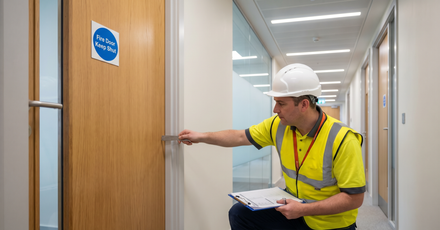
What is Fire Door Surveying? A fire door survey is a systematic inspection of every fire door in a building to confirm it will perform as rated during a fire. An FD30-rated door must hold back fire and smoke for 30 minutes. An FD60-rated door must hold for 60 minutes. The survey checks whether each door can still deliver that protection. Under Regulation 10 of the Fire Safety (England) Regulations 2022, building owners and managers of residential buildings with storeys 11 metres or above must carry out regular checks of all fire doors. The Regulatory Reform (Fire Safety) Order 2005 places a broader duty on responsible persons to maintain fire safety measures in all non-domestic premises and residential common areas. Why Fire Door Surveying Matters Fire doors are passive fire protection — they do not detect a fire or raise an alarm. They contain it. A properly functioning fire door holds back fire and hot smoke from escape routes, stairwells, and corridors, giving people time to get out and the fire service time to respond. A single defective door on an escape route can be the difference between a contained incident and a fatal one. If a fire door is damaged, incorrectly installed, or missing components, it can fail within minutes rather than holding for its rated 30 or 60 minutes. What Our Fire Door Survey IncludesVisual and physical inspection of every fire door on site Gap measurement using calibrated feeler gauges (3mm sides/top, 8-10mm threshold) Intumescent strip and smoke seal integrity check around the full perimeter Self-closing device function test from multiple open angles Hinge assessment — number, condition, rating, and fixings Condition grading for each door: pass, advisory, or fail Photographic report showing each defect with door location reference Prioritised remediation recommendations for every advisory and fail result Compliance certificate confirming the scope and outcome of the surveyFD30 vs FD60 Fire Door RatingsFD30 — 30 minutes fire resistance. Standard for offices, residential corridors, flat entrance doors, and retail units. FD60 — 60 minutes fire resistance. Required for high-rise stairwells, plant rooms, kitchens, storage areas, and high fire load zones.The required rating for each doorway is determined by the building's fire strategy and fire risk assessment. During a survey, we verify that the correct rating is installed in the correct location. Inspection FrequenciesDoor Type Frequency RequirementFlat entrance doors (residential 11m+) Quarterly Building Safety Act 2022Communal fire doors (residential 11m+) Annually Building Safety Act 2022All fire doors (commercial) Annually RRO 2005 best practiceAfter damage or alteration Before reuse RRO 2005Book a fire door survey today.
Read More Fire Door SurveyingFire Risk Assessments for All Rochdale Property Types
Specialist assessments tailored to your property type
Flats & Apartments
Communal area assessments for residential blocks and apartment buildings
HMO Properties
Licensing-compliant assessments for Houses in Multiple Occupation
Offices
Commercial office assessments from small units to multi-storey buildings
Retail Premises
Shops, retail parks, and retail units across Rochdale
Restaurants & Cafes
Commercial kitchen safety and extraction compliance
Hotels & B&Bs
Hospitality fire safety for sleeping accommodation
Care Homes
Specialist assessments for vulnerable residents with PEEPs
Warehouses
Industrial and storage facility fire risk assessments
Rochdale Fire Risk Assessment FAQs
Common questions from Rochdale businesses and property owners about fire safety compliance.
How much does a fire risk assessment cost in Rochdale?
How quickly can you assess a Rochdale property?
What types of Rochdale properties do you assess?
Do you cover Heywood and Middleton?
What regulations must Rochdale businesses comply with?
Can you help with Greater Manchester Fire and Rescue enforcement notices?
Do you cover residential properties in Rochdale?
What areas within Rochdale do you cover?
Ready to Get Your Fire Risk Assessment in Rochdale?
Professional service from BAFE-accredited engineers. 24-hour turnaround. From £150 + VAT.